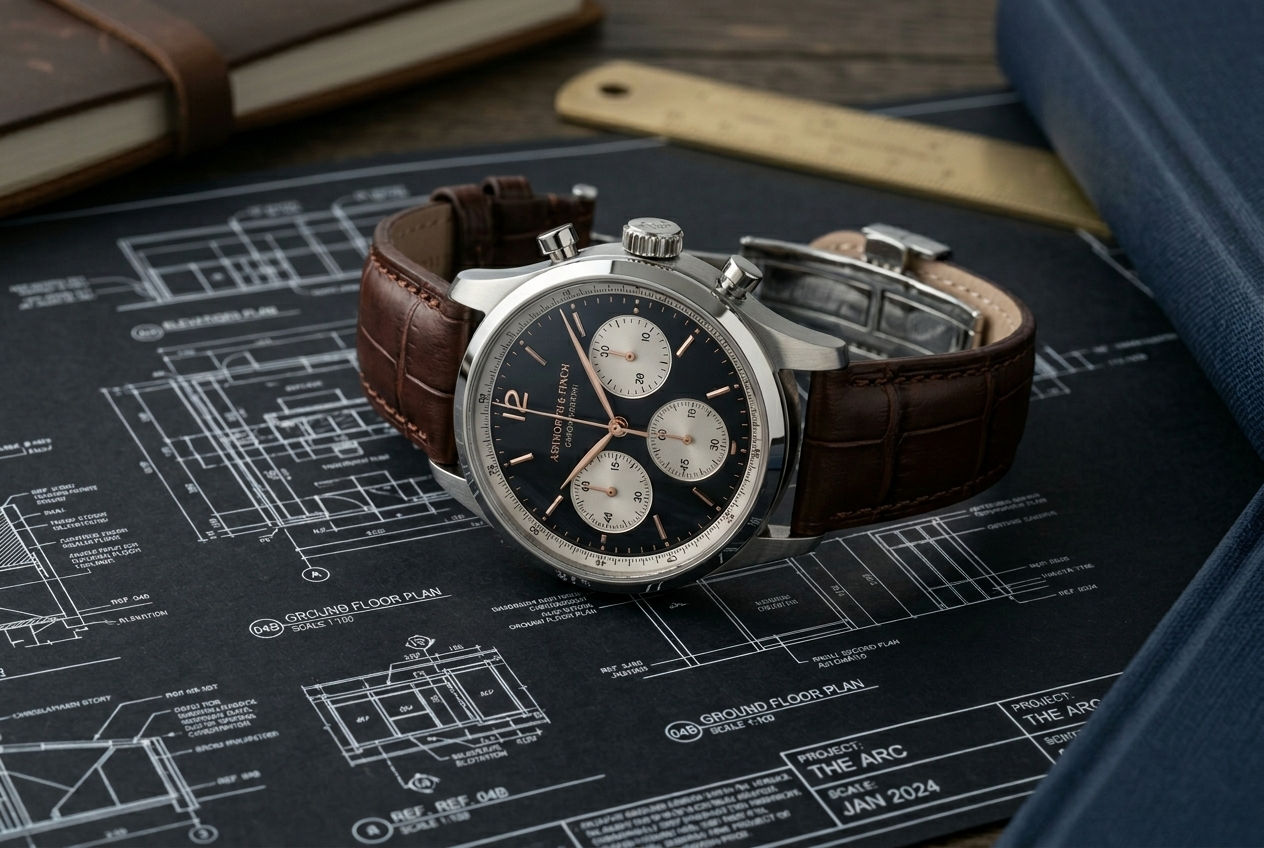
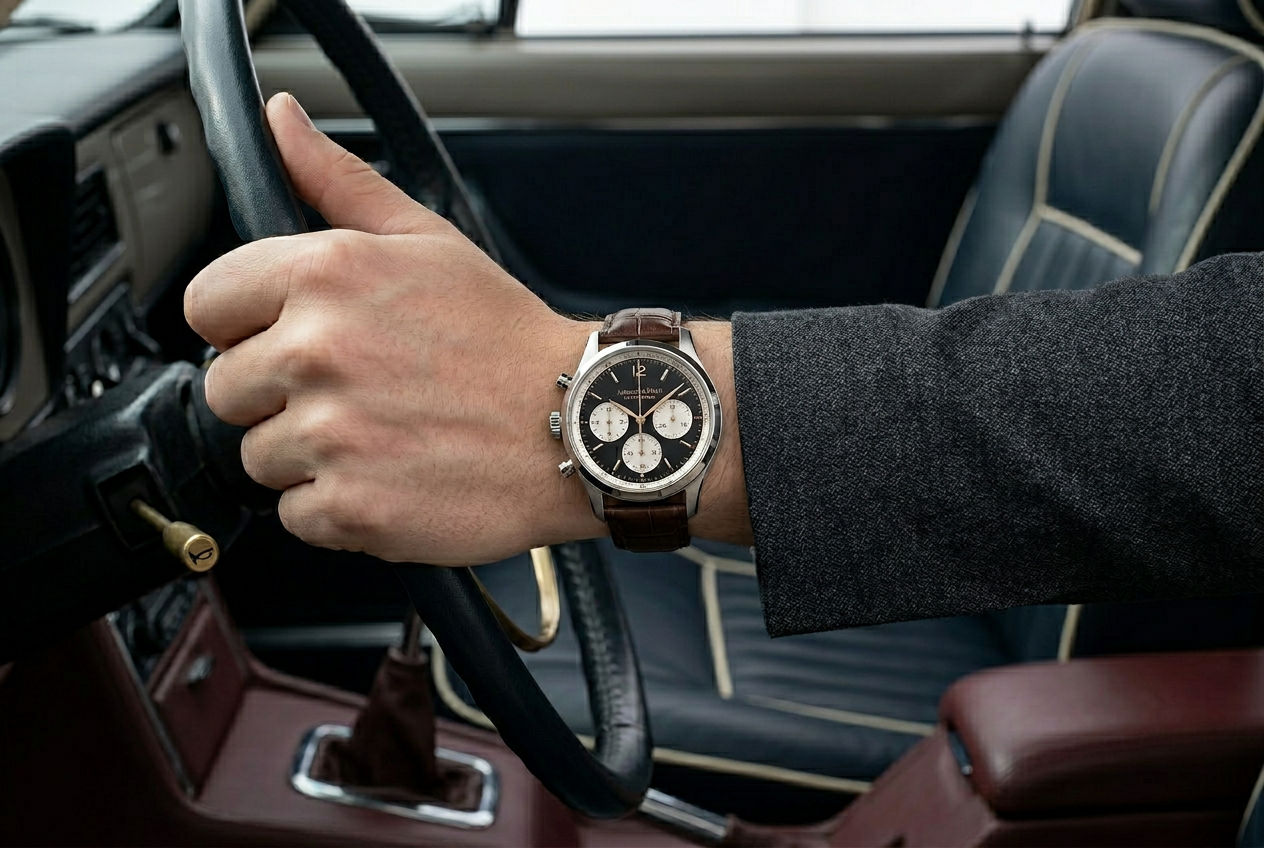
The Langdon Flyback Chronograph
- Case
- 42mm Stainless steel 316L, high-polish bezel, brushed case body, 13.2mm thick
- Dial
- Two dial variants, both with the same layout: two registers in a vertical orientation (30-minute counter at 12, running seconds at 6), with the central chronograph seconds hand and a tachymeter printed on the outer rehaut.
- Movement
- A&F calibre HF-501 (La Joux-Perret L100 (flyback, column-wheel, modern architecture))
- Power reserve
- 60 hours
- Water resistance
- 50m
- Crystal
- Domed sapphire, double internal anti-reflective coating
- Strap
- Hand-stitched black alligator (panda) or chocolate-brown alligator (reverse panda), 20mm, signed polished steel deployant clasp.
Heritage
The Langdon Chronograph took the longest to develop of any A&F piece — two and a half years from first sketch to first delivery. Harold's original brief was to make a flyback that could be legitimately worn as a dress piece, which required keeping the case under 13.5mm thick (difficult with a column-wheel movement) and designing a dial that read clearly at 42mm without the usual chronograph busyness. The decision to use the La Joux-Perret L100 rather than a modified ETA/Valjoux 7750 was deliberate and slightly expensive; the L100's thinner architecture was what made the sub-13.5mm case achievable.
Design
Chronographs are easy to design badly. Harold's two rules for the Langdon Chronograph were: the registers must not touch or cross any applied element on the dial, and the tachymeter must be legible enough to actually use. The second rule sounds obvious and is violated by most modern chronographs.